 Build A Striker
 Beginner Guide: Your First 10 Rounds
Ten rounds, ten possible attribute names, and one selection per round. Follow this beginner decision checklist as your random team and player offers appear.
How to Start Build A Striker on Roblox
Open the Roblox experience identified as Build A Striker and confirm that the developer is Wild Card. This is important because similarly named games and fan guides can describe completely different mechanics. Our link opens the developer-listed experience rather than a separate browser game or a download.
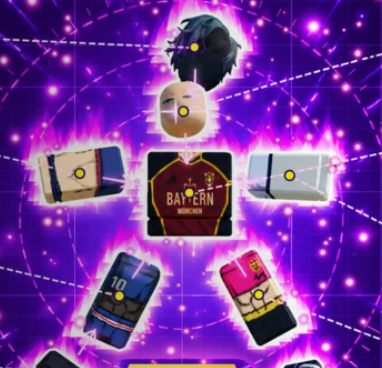
The confirmed gameplay loop is simple to explain but takes judgment to play well: a random team is chosen, a random player appears, and you select one of that player’s ten attribute categories. Repeat for ten rounds to assemble one striker. The official description also mentions a leaderboard, but we have not documented every post-run screen or button label.
Before choosing any attribute, decide what kind of result you want to explore: finishing, movement, chance creation, or a flexible mixture. These are our planning labels, not official character classes. Your actual options will depend on the random player the game shows.
The Team Roll, Player Draw and Attribute Pick
Use this sequence as a mental model, not as a claim about the names of every button on screen.
- Round begins with a team: The developer says a random team is rolled from First Selection through Pros. No official odds are provided here.
- A player appears: The team determines the random player offered for that round. We do not invent a roster or rarity percentage.
- Pick exactly one attribute: Compare the available choice with your plan. The official description expressly says choose ONE of ten attributes.
A Simple Plan for All 10 Rounds
There is no guaranteed script for ten random rounds. The point of a good beginner plan is to ask a better question at each choice. Early on, decide what the run might become. During the middle rounds, favor complementary options when the random offers allow them. Near the end, consider which needs are unaddressed instead of pursuing a name simply because it sounds rare.
If the first few offers strongly suggest one direction, you can lean into that approach. If later options do not support it, there is no shame in pivoting. No available official information proves that one specific order of Shooting, Speed, or other attributes always yields the highest score.
Rounds 1–3: Choose Your Goal
Take stock of which attributes appear and pick a provisional goal: Finisher, Speed Runner, Playmaker, or Balanced. This is an organizational aid. The game has not promised any of these as official classes.
- Ask which of your options aligns with the goal.
- Do not assume a specific team or player will appear later.
- Keep a mental note of the first three selections.
Rounds 4–7: Look for Complementary Choices
Mid-run, evaluate the combination you are actually assembling. If you are aiming for movement but have few control-oriented choices, consider an available complementary attribute without inventing an effect or guaranteed synergy.
- Compare present choices, not hypothetical future picks.
- Avoid using an unverified tier list as the only reason for a choice.
- If your original plan becomes unrealistic, adjust the direction.
Rounds 8–10: Review What Is Missing
With only a few decisions left, inspect the broad themes already chosen and decide whether consistency or variety matters more to your plan. This is an editorial heuristic, not a tested numerical rule.
- Look for gaps in your current set of selections.
- Do not assume a late-round reroll guarantees a better player.
- Review the result after your tenth selection.
| Stage | Question to ask | Practical approach |
|---|---|---|
| Rounds 1–3 | Which direction is emerging? | Choose a flexible initial priority. |
| Rounds 4–7 | What supports that direction? | Prefer complementary available options. |
| Rounds 8–10 | What is still missing? | Adapt rather than chase a promised perfect roll. |
An Example Ten-Round Decision Log
The following is an illustrative thought process, not a claim that these choices or players appear in a fixed order in the game.
Suppose your goal is a striker that prioritizes scoring. In the early rounds, record which attribute you pick and why. If Shooting is offered, you might select it for that goal; if it is not offered, choose from the visible alternatives rather than restarting your plan around a player the game never presented.
At the midpoint, compare your recorded choices. If your run has emphasized shooting repeatedly, you might seek a complementary quality such as Speed or Dribbling when available. That is a trade-off based on your goal, not a hidden game rule. If your available selections instead favor Passing or Vision, consider whether a creative build is the better fit for the current run.
In the final rounds, avoid making a last-minute choice only because another player recommended it as universally best. Read the labels and the result screen. After your ten selections, keep a quick record and try a different emphasis in the next run. A comparison is more informative than declaring a particular combination unbeatable from one random outcome.
What a useful record looks like
Write down the round number, the visible team or player if useful, the attribute you actually selected and one short reason. Do not invent probabilities or rankings for players you have not seen. After the run, review whether your choices formed a coherent style and note one change to test next time.
Beginner Mistakes to Avoid
Confusing the game with another title
Build A Striker by Wild Card is a ten-round Roblox random builder. A guide about league transfers or an entirely different shooter is describing something else.
Treating every build recommendation as a fact
Editorial build ideas can help you frame a run, but game-specific multipliers and tier rankings need repeatable evidence. No universal formula is confirmed by the official description.
Trusting untested code claims
Recent code strings may be useful, but do not spend time expecting a specific reward if sources disagree or the game says the code cannot be redeemed.
Ignoring the one-attribute decision
A single choice per round makes opportunity cost meaningful. Make the decision in front of you, rather than planning as if you could take all ten options at once.
What to Do After Your First Build
After ten selections, look at the striker and any comparison information that the current Roblox version provides. The developer mentions climbing a leaderboard; the precise ranking formula is not documented here. Keep your own notes on which attribute themes you chose if you want to compare multiple attempts.
For a second run, choose one variable to explore: a more finishing-oriented approach, a movement-oriented approach, or a balanced set of selections. This is a learning exercise, not a promise of a stronger score. To understand all available names, use the Attributes guide; to examine different priorities, use Best Builds.
Frequently Asked Questions
How many rounds are in Build A Striker?
The official game description says ten rounds, with a random team, a random player and one attribute choice each round.
Can I choose more than one attribute from a player?
The developer explicitly describes choosing ONE attribute. We have not confirmed an exception to this rule.
What is the best first attribute?
There is no verified universally best first pick. Choose among the options shown based on whether you want to explore finishing, movement, playmaking or balance.
Where can I find a build to try?
See the Best Builds guide for conditional strategy ideas and their limits, rather than unverified numerical rankings.